
Sheep Hunting Gear List: A Complete Backcountry Setup
Updated: Sep 11
The best sheep hunting gear list is not necessarily the lightest one or the one filled with the

newest equipment.
It is the gear you have tested, understand and still trust when you are several days into the mountains with no easy way to replace something that breaks.
I count ounces, but I am not an ultralight hunter at any cost. Some equipment earns its place because I use it every day. Other items come along because they could solve a serious problem if the weather changes, something fails or the hunt does not go according to plan.
I call that packing the what-ifs.
This is the complete gear system I am carrying for my 2026 sheep hunt, including my backpack, clothing, rifle, optics, electronics, shelter, sleep system, food, water, cooking equipment, first aid and miscellaneous gear.
Instead of putting everything into one 40-minute gear dump, I divided the list into six shorter videos. You can watch the complete playlist or jump directly to the category you are researching.
Watch the complete 2026 Sheep Hunt Gear List playlist: https://www.youtube.com/playlist?list=PLHCI7mTfIeiY
Affiliate Disclosure and Safety Note
Some links in this guide are Amazon affiliate links. As an Amazon Associate I earn from qualifying purchases. If you purchase through one of these links, I may receive a small commission at no additional cost to you. This does not affect which equipment I include or what I say about it.
This guide describes the equipment I personally use and the decisions I make for my own hunts. Conditions, experience, physical abilities and legal requirements vary. Test your equipment before entering the backcountry, follow manufacturer instructions and applicable hunting and firearms laws, and build a system appropriate for your own trip.
My Complete 2026 Sheep Hunting Gear List
My system is divided into six categories:
Hunting pack
Clothing, boots and rain gear
Rifle, optics and electronics
Shelter and sleep system
Food, water and cooking
First aid, navigation, repairs and other what-ifs
Mountain conditions can change quickly. A September or October sheep hunt may involve warm climbing weather, rain, hail, snow, freezing temperatures and heavy frost.
Every part of the system needs to work with the others. Saving weight in one category does not help if it creates a larger problem somewhere else.
Sheep Hunting Pack
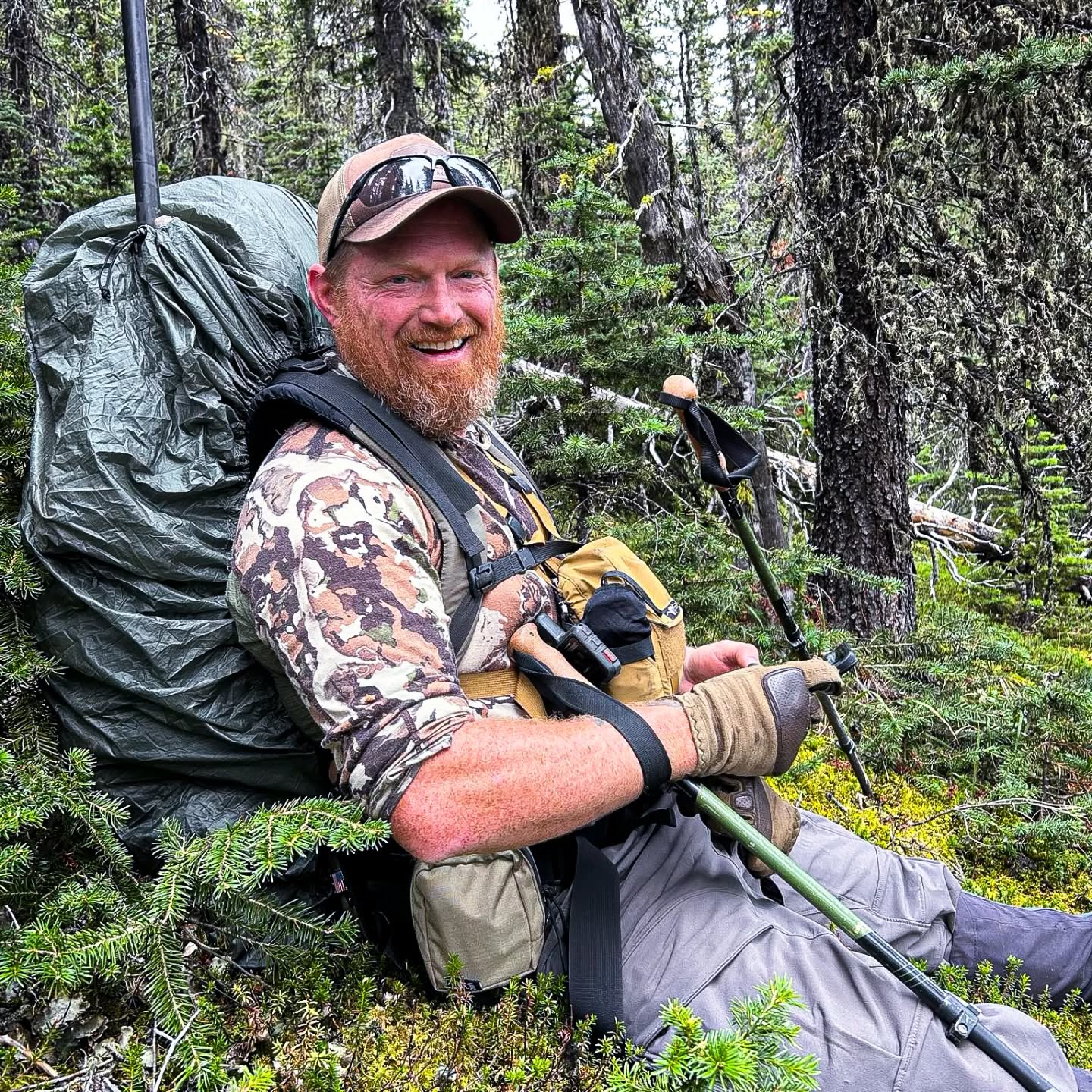
For 2026, I am returning to the Stone Glacier Sky 6900.
I had planned to carry the Canadian-made Backcountry Monashee Ridgeline 7500, but its updated carbon stays and hip belt did not arrive with enough time left for proper testing. With the hunt only two weeks away, carrying an unfamiliar pack into sheep country did not make sense.
The Stone Glacier is already proven. This will be its second sheep hunt, but I had used it extensively before that. I know how the frame fits, how it behaves under weight and how I like to organize it.
It is not perfect. I still dislike the tension created around the large centre zipper when the bag is packed tightly. I use an additional access bag on the front for smaller items that I want without opening the main bag.
With most of my food and four litres of water packed, but without the rifle or my final freeze-dried coffee, the pack weighed approximately 49.6 to 49.8 pounds.
That was also before the final what-ifs started finding their way inside.
My 2026 Sheep Hunting Pack
Stone Glacier Sky 6900
Stone Glacier XCurve load-hauling frame
Front access pouch
KUIU pack cover
Related Pack Reviews
Sheep Hunting Clothing System
My clothing needs to work during high-output climbing, long periods of glassing and rapidly changing mountain weather.
I run warm and sweat easily, so ventilation is important. I prefer clothing with large zippers and other ways to dump heat before moisture becomes a problem.
I bring both lighter and heavier options to the trailhead. The final decision depends on the actual conditions, not only the forecast. I have arrived expecting cold weather and found temperatures near +28°C. I have also watched snow arrive earlier than expected.
Clothing Worn While Hiking
My starting clothing normally includes:
Stone Glacier underwear
KUIU socks
Lightweight hooded First Lite base layer
Stone Glacier De Havilland pants
Gaiters
Crispi Briksdal boots
Bino harness
I bring both lighter and heavier De Havilland pants, but one pair can remain at camp after I see the conditions.
The Crispi Briksdal boots are my normal choice because they fit properly, are already broken in and remain reasonably light for a full-leather mountain boot. If snow and sustained freezing temperatures are already present, I can move to a heavier boot.
My older Stone Glacier gaiters still work, although I have also been testing the Backcountry Monashee Timberline gaiters.
Additional Clothing in My Pack
Stone Glacier Cirque synthetic insulated jacket
Stone Glacier down vest
Extra KUIU socks
Extra underwear
Warm wool long johns
KUIU boot-length zip-off long johns
Lightweight First Lite gloves
HEAT 3 mittens
Lightweight KUIU rain gear
Stone Glacier M7 insulated rain gear
Yes, I am carrying two rain systems.
The older KUIU rain gear is extremely light, packs down small and has full-length leg zippers. The Stone Glacier M7 provides additional warmth and protection but is less convenient to put on over boots.
Carrying both adds weight. Staying dry is one area where I am willing to make that sacrifice. If I never use the lightweight set, I carried extra weight for nothing. If the weather repeatedly changes between climbing, rain and cold, I may be very glad it is there.
And yes, everybody needs an extra pair of underwear.
Take a chance. Poop your pants.
Related Clothing Guides
Sheep Hunting Rifle, Optics and Electronics
Optics cover more country than my legs ever will, so this is not somewhere I will compromise on weight vs quality.
Swarovski STS 65 Spotting Scope
My spotting scope is a Swarovski STS 65.
Just before my first western sheep hunt, I was about to carry an old Bushnell Trophy spotting scope that was older than I was. I knew it was not up to the task of identifying legal rams at any sort of distance though it did work great at the range and eastern Canada.
When I was about to solve the problem with my credit card, I found the Swarovski used at a price that seemed almost too good. The previous owner eventually admitted that his dog had attacked it. The outside showed the evidence, but the glass was good.
It has been one of my most trusted pieces of equipment ever since. Even on many day hunts, it still comes with me.
Vortex Fury Rangefinding Binoculars
My binoculars are Vortex Fury HD rangefinding binoculars.
Combining the binoculars and rangefinder lets me glass, check distances and build a mental map of the terrain without constantly switching equipment.
I have ranged objects near 3,000 metres with them under the right conditions. Mine are not the ballistic version, but the range finding capability is still extremely useful.
I also carry an older Kestrel for wind, temperature and weather information. I know my rifle and its data, but having another source of information gives me additional confidence when conditions become difficult.
My Custom 6.5 PRC Sheep Rifle
The rifle is technically my wife’s custom 6.5 PRC, but it has become my primary mountain rifle.
It weighs slightly more than eight pounds and includes:
24-inch carbon-fibre barrel
Paradigm carbon stock
Defiance action
Nightforce NXS 3.5-15 scope
The Nightforce is one reason this rifle is heavier than some modern sheep-rifle builds. It is also exceptionally durable. I feel like I could use the rifle to pound in a tent peg and still trust it afterwards.
I am not actually recommending that anyone do that.
It may not be the lightest sheep rifle, but confidence matters more than removing a few final ounces from the rifle I may depend on when an opportunity arrives.
The rifle rides on a lightweight Revic Backpacker tripod when shooting support is needed. I am also still working through options for replacing the sling swivels.
Navigation and Communication
My electronics include:
Original Garmin inReach Mini
Cellphone
iHunter navigation app
Paper map
Compass
The original inReach Mini is beginning to show its age and now requires more frequent charging. It does not integrate with Garmin’s newest software as well as newer units, but it still communicates reliably and lets my wife know where I am.
My phone provides navigation, communication support and backup photography. It does not replace the waterproof paper map and compass.
Related Rifle and Optics Guides
Sheep Hunting Shelter and Sleep System
Sleep is not a luxury on a multi-day mountain hunt. Poor recovery affects decision-making, movement and how effectively you can hunt the following day.
My 2026 shelter is once again the KUIU Mountain Star 2P.
I have used this tent for years. The problems identified in my original review are still present, including the thin floor, but none of them have become significantly worse. It still works.
The two large vestibules provide valuable storage space for boots, packs and wet equipment. That matters when the hunters using it are not small people.
My Complete Sleep System
KUIU Mountain Star 2P tent
Tyvek groundsheet
Therm-a-Rest NeoAir UberLite sleeping pad
Stone Glacier 15-degree sleeping bag
Stone Glacier compression sack
I place the Tyvek underneath the tent because of its thin floor and because my sleeping pad is also built from very lightweight material.
The Therm-a-Rest UberLite is approaching seven years old. I know I may be pushing my luck, but it remains light, comfortable and has only suffered one puncture. It is also loud when I roll around, which the people sleeping near me occasionally appreciate less than I do.
My Stone Glacier 15-degree sleeping bag is rated to approximately -7°C. I often sleep with it partially open, but it has also kept me comfortable through heavy frost.
I do not normally carry a dedicated pillow. My insulated jacket gets rolled up and placed inside the sleeping bag’s hood instead. Leaving the pillow behind saves enough space and weight for at least one more what-if.
Related Shelter Review
Sheep Hunting Food, Water and Cooking
Water access was less reliable than expected during my previous hunt, so I increased my starting supply from three litres to four litres.
I was still considering adding another litre before stepping off.
Water and Filtration
My water system includes:
Multiple lightweight water containers: Nalgene 32oz (affiliate link) and Platypus SoftBottle 1L
LifeStraw bottle-style filter(affiliate link): Older version filter
Sawyer filter(affiliate link)
Spare Nalgene lid(affiliate link)
Salt
I generally use the LifeStraw system for drinking water. It is quick to fill from a water source and lets me continue moving.
The smaller Sawyer pouch can reach shallow or awkward water sources more easily. I primarily use the Sawyer for filtering cooking water, although the filters and containers can be adapted if part of the system fails.
I also carry salt. With my dietary restrictions, plain salt has worked better for me than flavoured hydration products. I add it to water and meals as needed.
That is what works for me. It is not medical or dietary advice for anyone else.
Backcountry Cooking Equipment
My cooking system remains simple:
MSR stove
Lightweight fuel canister
Seek Outside titanium cookware
The MSR stove is light, familiar and reliable. I have used it enough that operating it has become second nature. It also lets me use a moka pot at camp when I want fresh coffee. I make my own freeze-dried coffee, and I still think it is better than anything commercially available, but fresh coffee from the moka pot wins.
My Backcountry Food
My food is considerably different from a typical backcountry meal plan because I have significant dietary restrictions and have followed a strict carnivore diet for approximately six years.
We own a Harvest Right freeze dryer, so I prepare food that I know my body can tolerate.
Each main meal contains approximately:
One pound of ground beef
Three eggs
I also carry:
Homemade pemmican
Jerky
Salt
Approximately one pound of butter
Freeze-dried coffee
The butter provides additional calories and fat. I add it to my meals and have eaten it straight when necessary.
The other hunters may make fun of me, but this is the system my restrictions require.
Related Food and Cooking Guides
First Aid, Navigation and Packing the What-Ifs
The final category contains everything that does not fit neatly into the others.
It is also where the what-ifs multiply.
Safety and Navigation Gear
First aid kit
Waterproof paper map
Primary headlamp
Backup headlamp
Small emergency signalling lights
I reassess my first aid kit before every trip and make sure its contents remain current and appropriate for my abilities.
I do not remove essential first aid equipment simply to improve the number on the scale. It is only needed when something goes wrong, which is exactly why it needs to be there.
My primary headlamp normally lives in a hip-belt pocket. Once darkness approaches, I wear it around my neck so it cannot become separated from me.
The waterproof map is useful for navigation and can also become an emergency groundsheet.
Hygiene and Camp Gear
Toilet paper
Wet wipes
Toothbrush
Electronics and Repair Equipment
My everything bag includes:
Battery bank
Charging cables
Charging adapters
Spare headlamp batteries
Spare rangefinder battery
Tenacious Tape(affiliate link)
Electrical tape
Zip ties
Matches
Sleeping-pad repair kit
Space Pen (affiliate link)
Hunting journal (affiliate link)
The journal contains years of observations, including information about a ram I have repeatedly seen but have never managed to reach.
Electronics can fail. Written notes continue working regardless of battery life.
The small flashing lights are another unusual what-if. If I were injured after dark, placing a flashing coloured light in an open area could help searchers identify something that does not belong in the landscape.
https://www.brite-strike.com/product/lighted-trailblood-marking-system/ (manufacturer link; not affiliated)
Kill Kit and Ammunition
My kill equipment includes:
Replaceable-blade knife
Spare blades
Game bags
Cordage
20 rounds of ammunition
I know 20 rounds are more than I should realistically need. I also know that removing some would reduce weight without costing anything. It remains one of the what-ifs I have not convinced myself to leave behind.
The extra Nalgene lid falls into the same category. The lid is the only part I have repeatedly had fail. A replacement can turn a damaged filter bottle back into a basic water carrier.
How Much Should a Sheep Hunting Pack Weigh?
There is no single correct pack weight for every sheep hunter. Trip length, water availability, weather, food requirements, shelter choice, body size and shared equipment can change the total significantly.
My 2026 pack was sitting just under 50 pounds before adding the rifle and final last-minute items. That does not mean 50 pounds is the ideal target for someone else. This should work for me for 11 days.
Removing useful equipment simply to advertise a lower pack weight is not a victory. Neither is carrying unnecessary duplicates without considering whether they solve a realistic problem.
The goal is to know why every item is coming.
What Is the Best Sheep Hunting Gear?
The best sheep hunting gear is equipment that:
Fits your body properly
Has been tested before the hunt
Works with the rest of your system
Can handle the expected conditions
Remains dependable when wet, cold or heavily loaded
Solves a real problem without creating a larger one
That is why I returned to the Stone Glacier pack instead of carrying an updated pack I had not properly tested.
It is why I accept the weight of the Nightforce scope, carry two water-filter options and still bring a paper map beside my phone and Garmin.
The newest product is not automatically the best one.
Final Thoughts
This gear list will continue to change. Some equipment will remain because it works. Other products will wear out, fail during testing or be replaced by something that solves the problem better.
The conditions and goals of each hunt will also change what earns a place in the pack.
The main categories should remain consistent:
Pack
Clothing
Rifle and optics
Shelter and sleeping
Food, water and cooking
First aid, navigation and the what-ifs
That gives me a complete system I can reassess before every sheep hunt and update here as the equipment evolves.
Some of this gear will be used every day. Some of it may remain buried in the pack for the entire hunt.
Those are the what-ifs.
Watch the complete 2026 Sheep Hunt Gear List playlist: https://www.youtube.com/playlist?list=PLHCI7mTfIeiY
What is one piece of sheep hunting gear you refuse to leave behind?
Frequently Asked Questions About Sheep Hunting Gear
What gear do you need for a sheep hunt?
A complete sheep hunting gear list normally includes a load-hauling backpack, adaptable clothing, rain gear, mountain boots, shelter, sleeping bag, sleeping pad, food, water filtration, cooking equipment, optics, rifle, navigation, satellite communication, first aid supplies and a kill kit.
What size backpack is best for sheep hunting?
Many multi-day sheep hunters use packs in the 6,000 to 8,000 cubic-inch range. Fit and load-hauling ability matter more than advertised capacity. The frame needs to remain comfortable and stable under both your starting load and the additional weight of meat.
How heavy should a sheep hunting pack be?
There is no universal target. My 2026 pack weighed approximately 49.6 to 49.8 pounds before adding the rifle and final items for my expected 11 days. Trip length, food, water and weather can change that considerably.
Do you need a spotting scope for sheep hunting?
A spotting scope is extremely valuable for identifying sheep and evaluating animals from a distance. Good optics can prevent unnecessary travel across difficult terrain.
What temperature sleeping bag should you take sheep hunting?
The correct temperature rating depends on the season, location and expected weather. Also a big factor is your body type. I use a 15-degree sleeping bag rated to approximately -7°C for my September and October mountain hunts as I also tend to run a bit hotter than most people.
Should you carry a satellite communicator?
A satellite communicator provides an important communication option outside cellular coverage. I carry a Garmin inReach Mini.
Why carry two water filters?
Two filters provide different collection options and some redundancy. I use the LifeStraw system primarily for drinking and the Sawyer system primarily for filtering cooking water.
Do you need two sets of rain gear?
Most hunters will not. I am testing a lightweight KUIU system alongside the warmer Stone Glacier M7 because of the wide range of conditions expected during this hunt. After the hunt, I can decide whether carrying both was worth the additional weight.
Explore More Hunting and Gear Guides
Support The Baker Adventures
If our real-world gear testing and backcountry content help you plan your own adventures, you can support future projects through The Baker Adventures shop.
Your support helps fund the gear testing, truck builds and hunts behind these guides.
Comments