
How Our Family of 6 Actually Sleeps in a Truck Camper
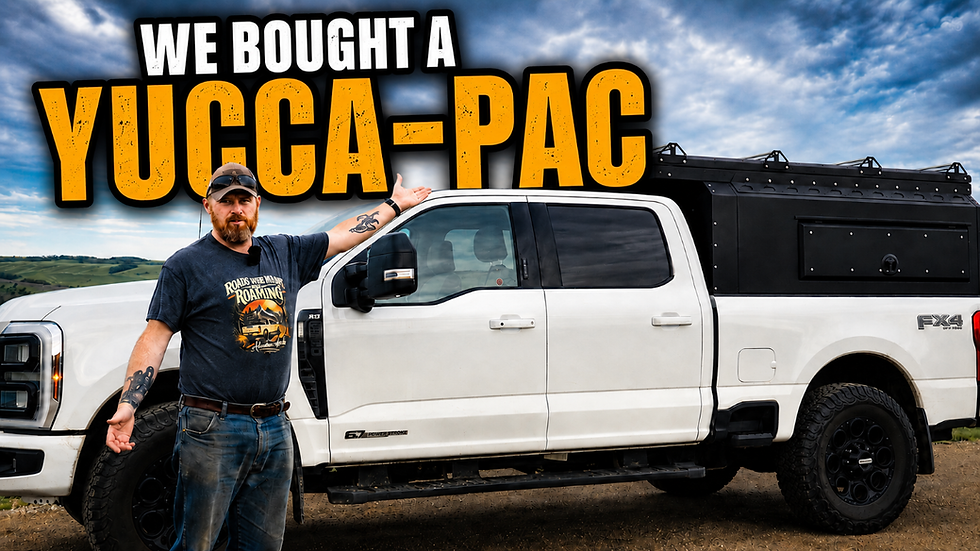
When we first introduced our Yucca-Pac Safari, one of the biggest questions was whether it could really sleep our family of six.
The short answer was yes.

What we had not shown was how.
There are not six permanent beds hidden inside the camper. Our current sleeping setup is temporary, a little crowded and requires the same space to do several different jobs throughout the day.
It is not the finished interior build, but after using it with all four kids, we know the basic idea works.
More importantly, we now know what needs to change.
The video above is the best way to understand the layout because this is difficult to show in a few photos. Below is the simple breakdown of who sleeps where, what has worked better than expected and what we need to solve before building the permanent interior.
Our Current Family of 6 Truck Camper Sleeping Setup
The arrangement is simple: three people sleep upstairs and three sleep downstairs.
Upper bed: Justine, Liyel and Loretta
Lower level: Dan, Elva and Barrett
That truck camper bed layout lets us use the full upper sleeping platform while taking advantage of the length and open floor space in the F-350’s truck bed.
It also answers the question from the video thumbnail: Where does Dad sleep?
Downstairs, wherever the kids leave room.
Three People Upstairs
Justine sleeps on the upper platform with Liyel and Loretta. This is the most conventional part of the arrangement because it works much like the main bed in any pop-up truck

camper.
The upper bed also stays warmer. Our diesel heater can warm the entire camper, but heat naturally rises, leaving the upper section noticeably warmer than the truck bed below.
That works well for Justine and the baby, especially during colder Alberta nights.

The compromise is movement. Once three people and their bedding are upstairs, climbing in, getting settled and getting back out takes a little cooperation. It works, but it is not a setup
where everyone gets a private bed and an unobstructed route to the door.
For now, Loretta's smaller sleep and nap setup gives us flexibility. As she grows, the upper arrangement will need to evolve with her.
Three People Downstairs
I sleep downstairs with Elva and Barrett.

At six foot two, I need most of the available length in the truck bed. The kids are still small enough to use the shorter spaces around the wheel wells, which is what makes the current arrangement possible.
The lower level is also cooler than the upper bed. The diesel heater has worked well, but airflow becomes important when the floor is filled with mattresses, sleeping bags and people.
Part of the permanent build will be directing warm air through the lower space without creating a hot spot near one sleeper and a cold pocket around another.
The lower setup is not elegant, but everyone has slept well in it. That matters more to us than whether it looks like a finished RV floor plan.
The Biggest Problem Is Not Sleeping Space
The biggest challenge is not fitting six bodies inside the Yucca-Pac. It is finding somewhere for everything else once those six people go to bed.
During the day, the open truck bed carries our clothes, food, bedding, camera gear, power system and everything else that follows a family of six into camp. At night, that same floor becomes part of the sleeping area.
That means most of the gear has to move.
In good weather, we can put equipment outside, move some into the truck cab or tuck it under shelter. In rain, wind or cold weather, that becomes far less convenient.
The camper technically sleeps six, but the finished build needs to sleep six while also protecting the gear that made the trip with us.
That is why the next stage is as much a storage project as it is a bed project.
The Yucca-Pac Cubby Dilemma
The front cubby is one of the most useful features in our camper. It gives us a fold-down table, enclosed storage and a protected place for parts of our temporary 12V system.
It also occupies space exactly where the lower sleeping and storage system needs to come together.
We have considered removing it, shortening it or cutting it down enough to preserve most of its function while gaining additional room. None of those options is an easy decision because removing useful storage to build different storage can quickly become a very expensive way to move the same problem.
For now, the cubby stays while we continue testing layouts around it.
Mocking Up the Permanent Truck Camper Interior With 2x4s
Before buying aluminum or cutting finished plywood, we started building rough layouts with 2x4s we have kicking around.

They are heavy, ugly and definitely not the finished camper interior, but they let us test bench height, sleeping width, aisle space and how six people move through the camper
without committing to an expensive mistake.
The current concept uses two benches approximately 19 to 20 inches wide with an aisle of roughly 24 inches between them. If it works, the benches could provide:
Seating during the day
Sleeping space at night
Storage underneath for clothes, food and camping equipment
A clear route to the rear door
Space to integrate the heater ducting and future electrical system
We still need to decide what the final version will be made from.
Wood would be easier and less expensive to build ourselves. Aluminum would be lighter, durable and a natural fit because both the F-350 body and the Yucca-Pac are already aluminum. We could also order a premade system or have the entire interior fabricated, although cost may make that decision for us.
The 2x4 version lets the family test the shape before the material becomes permanent.
Can a Yucca-Pac Really Sleep a Family of Six?
Yes, with a little creativity.
Our current setup is not the finished answer. We move gear every night, the lower level needs better heat distribution and the storage system is still represented by a pile of temporary lumber.
But all six of us can sleep inside the camper, everyone stays warm and the setup gets our family outside together.
That was the point of choosing the Yucca-Pac in the first place.
We did not need a camper with six permanent beds, a bathroom and a complete kitchen. I think you would also be hard-pressed to find one that fits that anyway.
We wanted a lightweight platform that kept Jolene useful as a truck while giving our family a fast, weather-protected place to sleep. The open layout gives us the freedom to build around our family instead of trying to fit six people into someone else's floor plan.
This is the temporary version. As we finish the storage benches, heat system and interior organization, we will document what works, what fails and what we change along the way.
For the beginning of the build, read our complete Yucca-Pac Safari walkthrough.
You can also follow the entire Ford F-350 overland hunting build, including the camper's heat, solar, power and future storage projects.


Comments