
HCalory Diesel Heater Review: One Season Later, Would I Buy It Again?

Updated: Nov 1
Didn't spill a drop.
Well, that's what I said anyway.
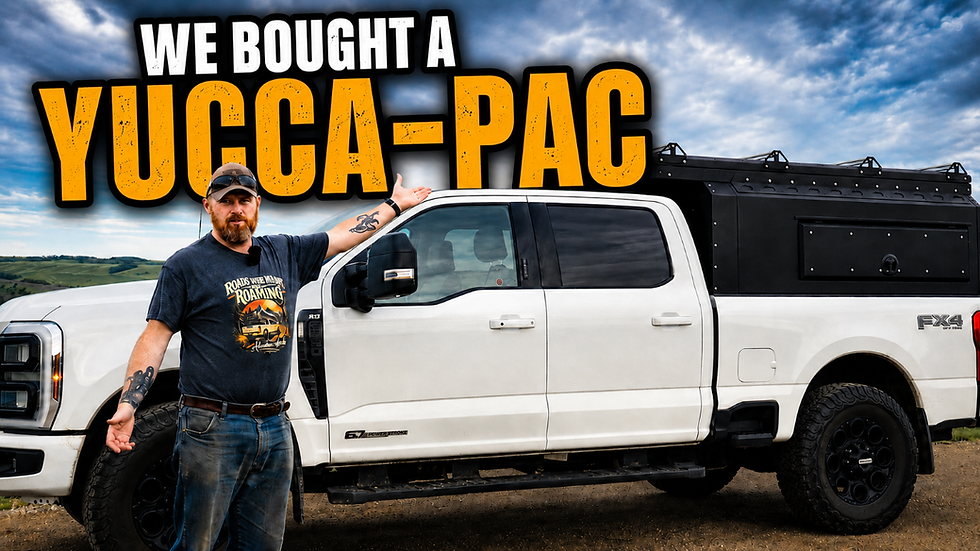
After a full season of using our HCalory Toolbox 2S diesel heater in the Yucca-Pac camper on Jolene, our Ford F350, we finally have enough real-world experience to give it a proper review.
We've put this little heater through torrential rain at the Alberta Outdoor Adventure Expo, wet backcountry camping trips, and even a snowy Canadian Thanksgiving with temperatures dropping as low as -18°C.
Through all of that, we had six people sleeping in the camper, wet clothing to dry, and kids constantly running in and out.
So how did our roughly $200 diesel heater hold up?
Surprisingly well. But there's one problem that we spotted during our original HCalory unboxing that has become a much bigger issue.
It leaks diesel fuel.
Affiliate disclosure: We purchased this HCalory heater ourselves. This article contains affiliate links, which may earn The Baker Adventures a commission at no additional cost to you.
HCalory Diesel Heater Review: What We Put It Through
When we originally purchased the HCalory Toolbox 2S, we weren't looking for a permanent camper heating system.
We needed something portable that could get us through our first camping trips while we figured out the final layout of the Yucca-Pac Safari.
And to be fair, we put this thing to work.
Our first big test was the Alberta Outdoor Adventure Expo. Between heavy rain, cold nights, and very little sunlight, we needed dependable heat without relying on shore power.
Then came our backcountry trips, followed by a snowy Thanksgiving weekend where temperatures dropped well below freezing.
The heater's job was pretty simple: keep six people warm, help dry our gear, and make our compact camper comfortable enough to actually enjoy those adventures.
And it worked.
The Biggest HCalory Problem: A Leaking Fuel Cap

Let's get the biggest complaint out of the way first.
The fuel cap on our HCalory Toolbox diesel heater does not tighten properly.
During our original unboxing in June, I noticed that the cap wasn't locking down the way I expected. I even questioned whether it would leak.
Well, several months later, we have our answer. It leaks.
The cap continually slips when tightened, and it doesn't matter whether the little fuel pre-filter is installed or removed.
The diesel runs down the side of the heater, leaving stains and eventually collecting underneath it. What makes this particularly concerning is the location of the electrical connections near the affected area. The last thing I want is diesel fuel getting into electrical components or soaking the area where we're storing our camping gear. And when you're sleeping in the same camper where that heater gets transported, you definitely don't want everything smelling like diesel fuel.
We've tried temporarily containing the mess during transportation, but that's not a proper repair. The cap also has a vent that must not be obstructed during operation.
This is the one issue I cannot simply overlook. A leaking fuel system needs to be properly repaired before further use or transport. It's frustrating because, as you'll see below, the actual heating performance has been excellent.
How Well Does the HCalory Heat in -18°C Weather?
This is where the heater really surprised us.
During our cold-weather camping trip, we managed approximately 28 hours of heating on half a tank of diesel, with the camper set around 16°C (61°F) while outdoor temperatures dropped to approximately -18°C (0°F).
That's a pretty impressive result for a budget portable diesel heater. And remember, we're not heating a perfectly sealed little box.
Our Yucca-Pac has a large rear opening. Every time somebody opens it, a good portion of the warm air escapes. With four kids constantly coming and going, often returning with soaking wet clothes, that opening gets used a lot. We did make use of the camper's insulation panel to help retain heat, but the heater still had to recover every time the camper was opened.
It kept up without a problem. In fact, there were nights when Justine was telling me it was getting too hot inside.
Not exactly the complaint I expected from our first Alberta winter camping tests.
Condensation and Drying Wet Camping Gear
One of the other things that impressed me was how little condensation we experienced.
If you've watched our family of six truck camper sleeping setup, you'll know we pack quite a few people into a relatively compact space.
Add wet clothing, snowy boots, and the moisture created by six people breathing overnight, and condensation becomes something worth watching.
Despite all of that, we experienced little to no noticeable condensation during our testing.
We were also able to hang wet clothing inside the camper and let the warm air help dry everything out.
That's a big deal when you have kids who would happily spend the entire day getting soaked in the snow or rain.
The heater produces dry, indirect cabin heat because its combustion exhaust is kept separate from the heated living air. Proper ventilation still matters, but our overall setup handled moisture much better than I expected.
What We Didn't Like About the HCalory Toolbox 2S
The leaking fuel cap was easily our biggest complaint, but a few smaller issues became obvious throughout the season.
The Included Hot Air Duct Is Too Short
During the original unboxing, I measured the supplied hot air duct at approximately 26 inches (65 cm). For a heater designed to sit outside a camper or tent, I still don't understand why they made it so short.
We ended up purchasing approximately eight feet of ducting from our local hardware store for about $12. It was a quick, affordable solution that gave us the length we needed. Any replacement ducting still needs to be appropriately heat-rated and installed without restricting the heater's airflow.
I'd much rather HCalory include a longer duct that can be compressed for storage.
The Built-In Controller Isn't Very Intuitive
The next issue is the onboard controller.
To be fair, some of this might be because I didn't spend enough time memorizing the instructions. But when it's midnight and Justine wants the temperature adjusted, the last thing I want is to scroll through a series of settings I can't remember.
The Bluetooth app, however, is a completely different story. Once paired, the app is much easier to understand and operate.
For our setup, I'd much rather use the app than the little built-in controller which actually in contrary to how I would really like it. We use our phones for content and I hate having to use it taking up the precious storage and battery life.
Exhaust Positioning Could Be Better
The exhaust exits very close to ground level. That means you need to pay particular attention to where the heater is sitting, especially around grass, leaves, and other potentially combustible materials.
Our temporary solution was using an old Coleman stove stand to elevate the unit. It was a convenient way of getting the heater off the ground, although any stand and exhaust arrangement needs to maintain the manufacturer's required stability and clearances.
For a portable heater designed for outdoor use, better ground clearance would certainly be appreciated.
How Much 12V Power Did the HCalory Use?
Another pleasant surprise was how well the heater worked with our basic camper electrical system.
When we installed the Yucca-Pac, we put together a simple 12V setup consisting of a 105Ah AGM battery and a 100W solar panel. Nothing fancy.
During the Alberta Outdoor Adventure Expo, that system powered the heater for approximately 26 hours through some miserable weather. And during our snowy Thanksgiving trip, the solar panel was covered in snow for much of the time.
Despite that, we didn't run out of electrical power while operating the heater.
Now, I'd love to give you exact watt-hours and detailed electrical consumption numbers, but our current battery monitoring system is about as basic as it gets.
Three little lights tell me whether things look good, and that's about it. What I can tell you is that the system worked throughout our trips without leaving us without heat.
If you're interested in how we powered everything, I've already documented our simple 12V diesel heater power setup, including the battery, solar panel, wiring, and what we paid.
Would I Buy the HCalory Diesel Heater Again?
Here's where things get interesting: Yes, I would consider buying another HCalory.
Despite the fuel cap problem, I really do think this heater delivered good value for what we paid.
Could I have purchased a basic diesel heater without the toolbox enclosure and saved some money? Absolutely. But at the time, we needed heat immediately. We had an Expo coming up, a new camper to test, and no permanent electrical or heating system installed.
The Toolbox 2S gave us a portable solution that allowed us to start camping instead of waiting for the perfect build. And after using it through rain, snow, and some pretty cold nights, I have no complaints about its ability to generate heat.
That doesn't mean I'd recommend continuing to use one with a leaking fuel tank. The fuel system has to be safe and properly sealed before I'd be comfortable relying on it again.
But with that issue corrected, I can absolutely see the value in this type of heater.
What About the New HCalory Toolbox 3?
HCalory has since introduced a newer Toolbox 3 model, and there's been some discussion about us potentially testing one.
I haven't tested that version yet, so I can't tell you whether it actually improves on the problems we've experienced.
But if they've addressed the leaking fuel cap, that's a major step in the right direction.
I'd certainly be interested in finding out.
What's Next for Our Camper Heating System?
Our original plan was to eventually remove the heater components from the portable toolbox and integrate them directly into the Yucca-Pac.
That idea hasn't completely disappeared.
A permanent installation could free up some space and make heat distribution easier, but we'd need to properly address the fuel system, exhaust, mounting, and electrical connections first.
I've also been considering an externally mounted fuel container with a quick-disconnect arrangement, provided we can design a safe, compatible system.
For now, we're still working through the final camper layout.
That's part of the larger Ford F350 overland hunting build. We try things, see what works, figure out what doesn't, and make changes based on actual use rather than just how things look on paper.
Final Verdict: Great Heat, Disappointing Fuel Tank
After a full season with the HCalory Toolbox 2S, I still think we made the right purchasing decision for our situation.
It gave us dependable heat when we needed it, worked with our simple 12V electrical system, and kept our family comfortable through some pretty miserable Alberta weather.
The heating performance exceeded my expectations. The fuel tank design did not.
For the money, there's a lot to like about this heater, but the leaking cap is a significant problem that needs to be corrected rather than ignored.
Would I try the newer Toolbox 3? Absolutely.
Would I trust our current heater without addressing the fuel leak first? Not a chance.
What would you do? Stick with the Toolbox 2S after repairing the problem, or give the newer Toolbox 3 a shot?
Gear and Related Articles
HCalory Toolbox Diesel Heater: Check the Amazon listing (affiliate link; verify the exact model and specifications before purchasing)
More from the Jolene build:
The Baker Adventures is independently funded. If you enjoy following our builds, gear testing, and family adventures, you can also support future projects through our website and merchandise store.


Comments