
Portable CO Detector for Truck Camper Safety
Updated: Aug 25
Carbon monoxide is one of those things you hope you never have to deal with, but it is also one of those things I would rather overthink than under think.
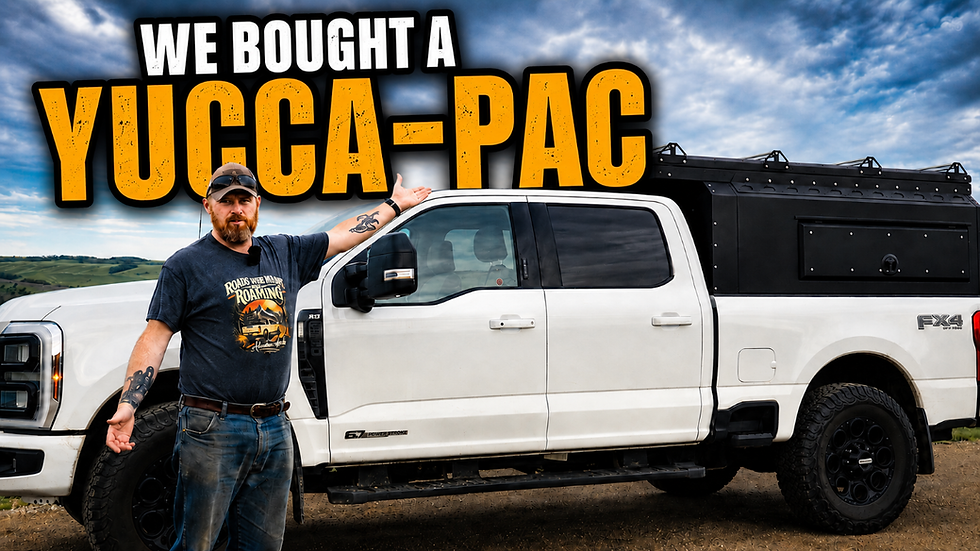
When we started setting up the Yucca-Pac on our Ford F-350, safety was one of the first things on my mind.
If you missed it, this all started with our Yucca-Pac truck camper setup, where we began figuring out how to turn the F-350 into a real family camping system.
We are not just building this camper for one person. We are building it for a family of six. That means there are kids sleeping in the back, gear packed tight, and eventually there will be heat, storage, benches, and a lot more time spent camping in cold weather.
So, before getting too deep into the camper build, I wanted to add another layer of protection: a portable carbon monoxide detector.
This video was supposed to be a simple unboxing, but like most things around here, it turned into a real family camper safety conversation.
Why I Wanted a Carbon Monoxide Detector in the Truck Camper
Most of us already think about carbon monoxide detectors in our houses. They are just part of the normal safety setup. But when it comes to campers, tents, truck canopies, diesel heaters, propane appliances, wood stoves, camp stoves, and other fuel-burning gear, I think it is easy to get a little too comfortable.
Carbon monoxide is not something you can see or smell. That is what makes it scary. If something is burning fuel and the combustion is not right, carbon monoxide can become a serious problem fast.
For us, the big reason this matters is our camper setup.
We are building this truck camper as a real family camping system. The Yucca-Pac gives us a compact, enclosed space where we can sleep, store gear, and eventually build out benches and storage. We are also testing diesel heater options, and we have used wood stove and tent setups over the years. One of those pieces of gear is the HCalory diesel heater, which is exactly why I wanted to start thinking more seriously about CO monitoring before we actually rely on heat inside the camper or tent.
That combination made me want a dedicated CO detector that could move between setups.
One night it might be in the back of the truck. Another trip it might be in the tent if we are running a heater. Another time it might be packed as part of our general travel safety kit.
The Detector We Picked
The one I ordered was the AEGTEST AGT-3000 portable carbon monoxide detector. (affiliate link)
*As an Amazon Associate, I earn from qualifying purchases at no extra cost to you.
This is not a long-term review yet. This is just a first look, unboxing, and initial test. But there were a few things that caught my attention when I was looking for an extra detector.
The big one was that it is rechargeable with USB-C.
You can absolutely buy a regular household carbon monoxide detector with a long-life battery, and honestly, that is still a very good option. We have one of those as well, and for the first while I will probably keep both in the camper because that is just how I am with safety. I would rather be too safe with my family than not safe enough.
But the portable USB-C style interested me because we already carry a lot of USB charging gear. Between power banks, vehicle charging, camper power, and other electronics, USB-C fits into our current system pretty easily.
The unit also came with a small case, a charging cable, and a Velcro/carabiner-style attachment, which should make it easier to hang or place inside the camper.
Why Battery Power Interested Me
One thing I mentioned in the video is power.
With diesel heaters and other 12-volt gear, your power system matters. If your 12-volt power starts getting low, or if something in the electrical setup is not working properly, that can affect how your equipment runs.
That was part of the reason I liked the idea of having a detector that was not directly tied into the same 12-volt system as the rest of the camper.
hardwired or 12-volt camper-specific CO alarm can make a lot of sense. I am not saying this replaces that. But I do like having a separate portable unit with its own battery as an extra layer.
For our setup, that means if we are using the truck camper, the detector can come with us. If we are sleeping in the tent and using the HCalory diesel heater or another heat source, it can move over there too. If we are travelling, it can be packed along.
That flexibility is the main reason I wanted to try it.
First Impressions Out of the Box
Elva helped me open this one up while Barrett was napping.
Right away, the packaging was better than I expected. The case was a nice surprise, and the detector itself felt more like a small piece of outdoor kit than a regular household alarm.
The screen is easy to read, and it turned on right out of the box. It did a countdown and then showed the reading in parts per million. Sitting in the back of the truck while we opened it, it read zero.
That is exactly what you want to see.
From there, I wanted to know if it would actually react to carbon monoxide.
Testing the Detector
After reading through the instructions, I tried one of the test methods described for the unit.
This was a controlled test, and I am not pretending it is the same thing as a certified lab test. It was simply a way to confirm that the detector would register a change and sound an alarm when exposed to carbon monoxide from a small test source.
The detector picked it up.
As we brought it close to the test container, the reading started to climb. It showed a reading in the 40 ppm range, the alarm sounded, and then the number started coming back down once it was moved away.
That gave me some confidence that the unit was at least responding.
Again, this does not mean I am throwing away every other alarm and trusting one little Amazon detector with everything. That would not be the point. The point is that it gives us another layer of awareness.
Teaching the Kids What the Alarm Means
One of my favourite parts of the video was asking Elva what she should do if she hears the alarm.
Her first answer was pretty kid-like, but we worked through it.
The answer is simple: wake everybody up and get out of the truck.
That is the part that matters.
Having safety gear is one thing. Teaching the kids what that gear means is another. If an alarm goes off in the middle of the night, I do not want confusion. I want the kids to know that an alarm means we move.
Get out first. Figure it out second.
That is the same mindset we use with a lot of outdoor safety. Whether it is bear safety, fire safety, water safety, or carbon monoxide, the gear only helps if the people using it understand what to do.
This Is Not a Replacement for Common Sense
A carbon monoxide detector is important, but it is not a replacement for maintenance or proper setup.
If you are running a diesel heater, propane appliance, wood stove, or any other fuel-burning system, it still needs to be installed properly, vented properly, maintained properly, and used properly.
Keep exhaust areas clear. Keep vents clear. Pay attention to your power system. Do not ignore weird smells, poor combustion, error codes, blocked exhaust, low voltage, or anything else that seems off.
A detector is the last line of warning. It should not be the only thing you rely on.
For our camper, this is just one piece of the system.
We still need to build the benches. We still need to sort out the storage. We still need to finalize where the diesel heater will live, how the power will be set up, and how we want the lower sleeping area to work for the kids.
But before any of that gets too far along, I wanted the safety side started.
Where This Fits in Our Camper Build
The Yucca-Pac build is going to be a long-term project. We are not building a show truck. We are building something we can actually use as a family. This is also part of the bigger Ford F-350 overland hunting build, where the goal is to keep Jolene useful as a hunting truck, family camper, and long-distance travel rig.
The next big step is the bench system.
The benches will give us a place to sit, a place to sleep, and a lot more storage in the back of the truck. They will also help us organize the camper so things like power, heat, cooking gear, and safety equipment all have a proper place.
This portable CO detector will likely live somewhere easy to see and hear while we are sleeping. I still want to test placement once the benches are built, because where it works best now may not be where it works best after the camper layout changes.
For now, I like that it is small, rechargeable, and easy to move between the truck camper and tent setups.
Final Thoughts
This was a small piece of gear, but it is one of those things that could matter a lot.
I bought the AEGTEST AGT-3000 because I wanted an extra portable carbon monoxide detector for the truck camper, especially as we continue testing diesel heater options and building the Yucca-Pac into a real family camping setup.
So far, first impressions are good. It turned on out of the box, showed a clear reading, came with a case and USB-C charging cable, and reacted during the test.
Will I trust it as the only carbon monoxide detector in the camper right away?
Probably not.
For now, I will likely run this along with our regular CO detector because I would rather have two layers of protection than one. Over time, after more real use in the camper and tent, I will have a better idea of where it fits best in our setup.
But as a portable travel and camping safety item, I think it makes a lot of sense.
If you want to check out the same portable CO detector we are testing, here is the linkAEGTEST AGT-3000.
If you are building a truck camper, running a diesel heater, camping with kids, or spending nights in a small enclosed space, carbon monoxide is worth thinking about before there is ever a problem.
Thanks for following along with the build. The benches are next, and that should bring the camper one step closer to actually sleeping our family of six.
Hopefully we see you out on the trails.


Comments